Quick Answer
The interior design process is the step-by-step method designers use to transform a space—from initial consultation and concept creation to planning, execution, and final styling. It helps you move from ideas to a fully finished home with clarity, structure, and zero guesswork.
Core stages include: Consultation, Site Assessment, Concept & Mood Boards, Space Planning, Material Selection, 3D Rendering, Budgeting, Execution, Quality Checks, and Handover.
If you’re just starting your home transformation, you can also explore our residential interior design services to understand how the team handles turnkey projects built around durability and style. Let’s break it down so you know exactly what to expect.
Step-By-Step Interior Design Process (Used by Industry Professionals)
- 1. Initial Consultation: Understanding Your Needs
This first meeting shapes everything that follows. You discuss:
- Your lifestyle
- Aesthetic preferences
- Functional needs
- Budget range
- Timeline
Designers gather references, clarify expectations, and outline the scope of work. This prevents miscommunication later.
- 2. Site Visit and Measurements
nce the designer understands your goals, a site analysis follows. It includes:
- Exact room measurements
- Light and ventilation check
- Structural limitations
- Electrical and plumbing points
Elegant Homes Interior team also handles plumbing and electrical work to align new layouts with technical feasibility.
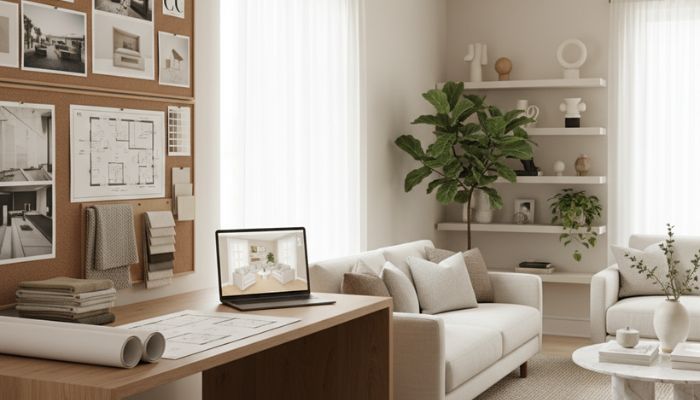
- 3. Concept Development and Mood Boards
Here’s where ideas start taking life. Designers explore themes such as:
- Minimalist
- Modern classic
- Scandinavian
- Contemporary
- Rustic luxury
Mood boards help you visualize how colors, textures, fabrics, and furniture styles come together.
- 4. Space Planning and Layouts
This stage is about functionality Designers prepare:
- Furniture layouts
- Traffic flow plans
- Zoning
- Storage planning
- Modular kitchen structure
Good space planning ensures your home feels spacious, balanced, and usable every day.
- 5. Material and Finish Selection
You choose:
- Laminates
- Veneers
- Marble and tiles
- Textiles
- Paint shades
- Hardware
- Lighting fixtures
A designer’s experience helps you avoid materials that look good on paper but fail in real-life use.
- 6. 3D Visualizations
Now you see your home before it’s built. 3D renders allow you to:
- Preview furniture placement
- Understand lighting levels
- Compare color options
- Approve or adjust designs
This step eliminates guesswork and boosts confidence in final decisions.
- 7. Budget Planning
Once designs are approved, a consolidated cost sheet is created. It includes:
- Furniture manufacturing
- Civil work
- Electrical and plumbing changes
- Painting and wallpaper
- False ceiling
- Décor and lighting fixtures
Transparent budgeting prevents unexpected expenses mid-project.
- 8. Execution and Production
This is where the magic happens Depending on your design, execution may include:
- Modular factory production
- On-site carpentry
- Civil adjustments
- Electrical rewiring
- Ceiling and lighting installation
- Painting and wall treatments
- Furniture installation
Elegant Homes Interior also handles false ceilings and lighting so your space feels balanced and well-lit. A professional studio runs strict quality checks during each phase.
- 9. Styling and Final Handover
The last stage is about bringing character into your space. Designers add:
- Curtains
- Rugs
- Art
- Plants
- Table décor
- Accent lighting
Once the styling is complete, your home is cleaned, inspected, and handed over.
Behind the Scenes: How Elegant Homes Interior Ensures Quality
Elegant Homes Interior focuses on:
- Premium hardware and materials that last
- Factory-finished modular furniture for uniformity
- On-site supervision to avoid construction errors
- Client walkthroughs during major milestones
- Timely project delivery
This disciplined approach is why the brand is trusted for turnkey residential projects across India. You can always learn more about the team’s approach on the official website.
How Long Does the Interior Design Process Take?
Timelines depend on scope, but here’s a realistic estimate:
| Area | Timeline |
| 1BHK | 30–45 days |
| 2BHK | 45–60 days |
| 3BHK | 60–75 days |
| Villas | 90+ days |
Custom elements or heavy civil work can extend the timeframe.
What Influences the Overall Cost?
People often ask why interior budgets vary. These factors play a major role:
- Size of the home
- Material choices
- Custom vs modular furniture
- Brand of hardware and appliances
- Civil modifications
- Complexity of the false ceiling
- Lighting plan
Working with a professional ensures the design and execution match your lifestyle, not just trends.
Tips to Make Your Interior Design Project Smooth
- Have Pinterest ideas ready, but stay open to professional advice.
- Lock your budget early.
- Approve drawings and 3D renders on time.
- Don’t rush material selection.
- Ask for regular project updates.
- Think long-term, especially for kitchen and wardrobe materials.
Final Thoughts
The interior design process is a structured journey that turns your space into something functional, personal, and timeless. When done right, it eliminates stress and helps you achieve a home that reflects you.
Elegant Homes Interior uses this structured flow to deliver thoughtful, high-quality spaces that feel warm, aesthetic, and practical every day. If you’re ready to begin your project, you can contact the team directly for a consultation.
FAQ
Ans. It’s a structured workflow that covers planning, designing, material selection, execution, and final styling to transform a space.
Ans. Most professional studios follow 8–10 stages, including consultation, concept development, layouts, budgeting, and execution.
Ans. A typical home takes 45–75 days, depending on the size, materials, and complexity of the design.
Ans. You can try managing it yourself, but a designer prevents costly mistakes and speeds up execution.
Ans. Ideally, right after getting possession or during construction, so layout planning aligns with electrical and plumbing points.